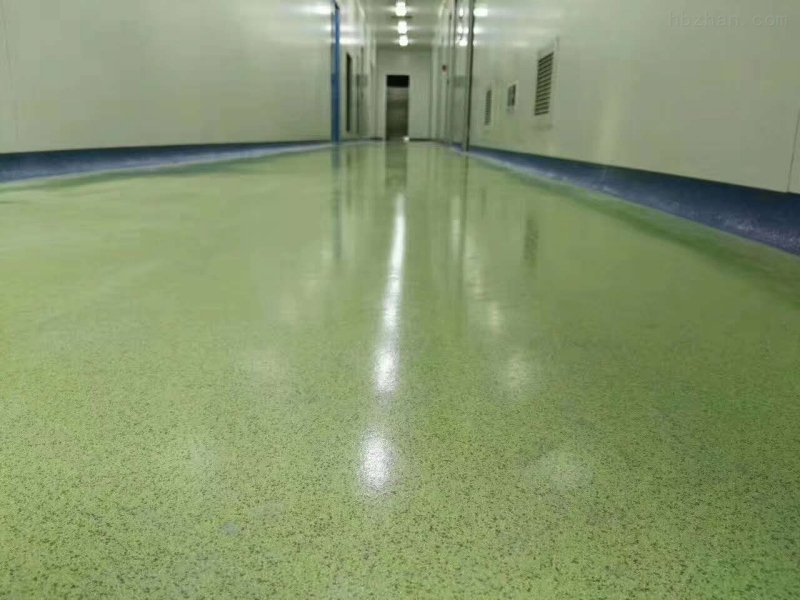
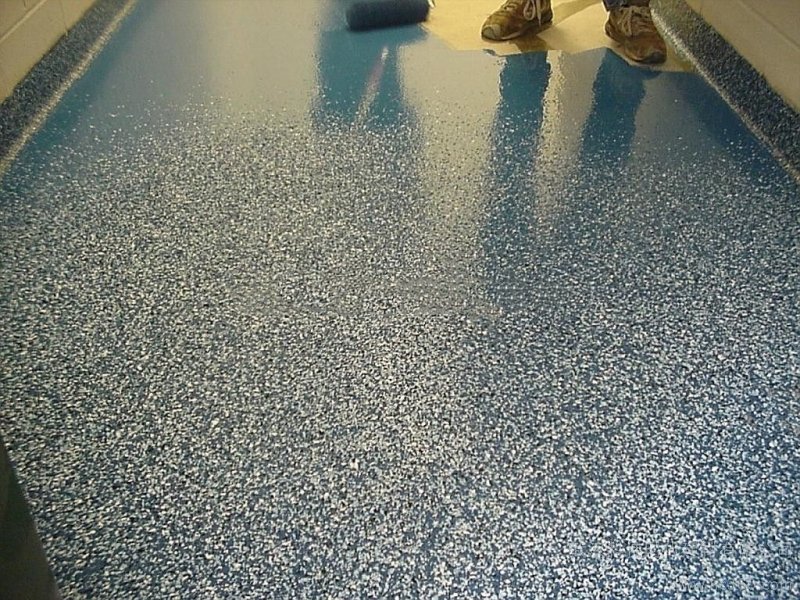
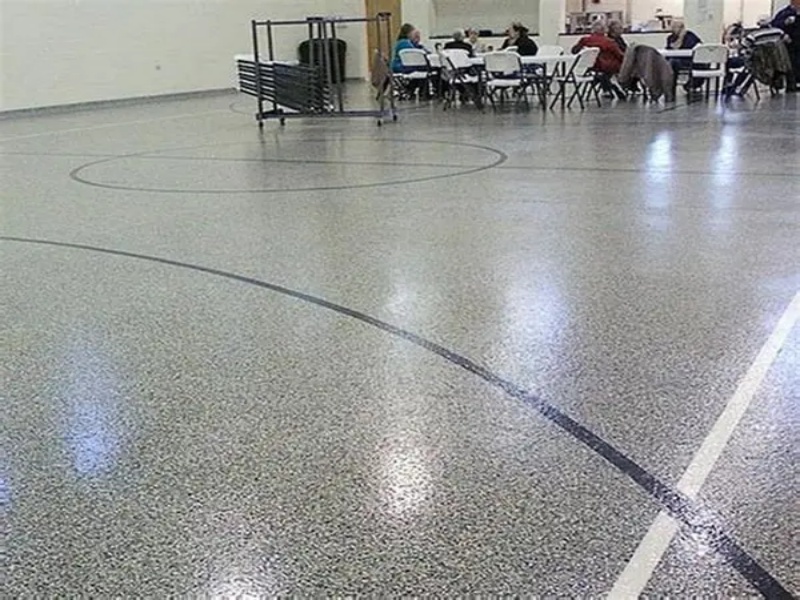
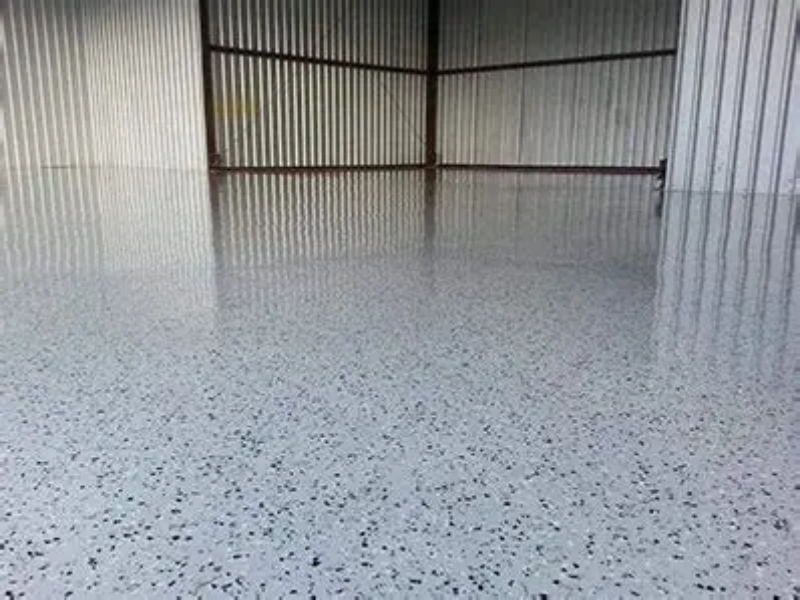
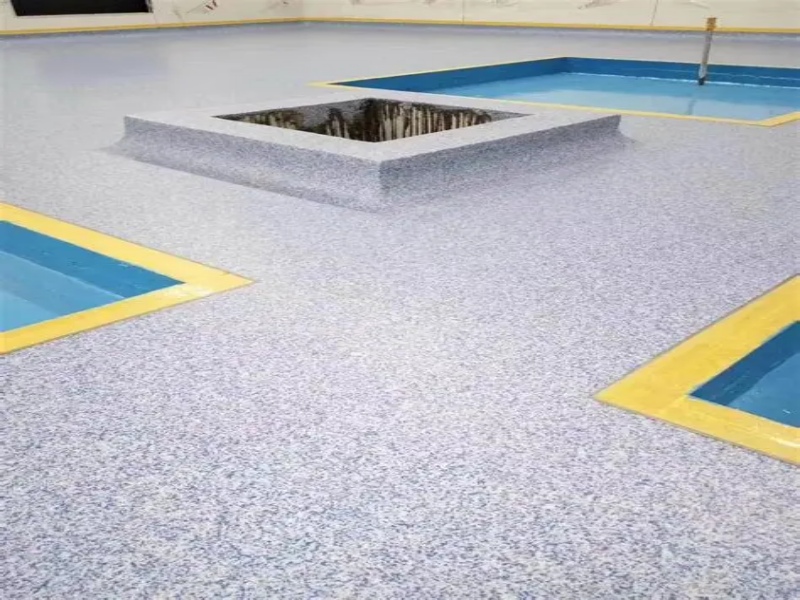
Water-based epoxy self-leveling floor coating

Дом

Water-based epoxy self-leveling floor coating

  • Water-Based Epoxy Colored Sand Floor Paint Maintenance Guide: 5 Tips for 10-Year-Like-New Use
    Water-Based Epoxy Colored Sand Floor Paint Maintenance Guide: 5 Tips for 10-Year-Like-New Use
    Mar 10, 2026
    1. Daily Cleaning: "Be Gentle" to Avoid Damaging the Grain Texture  Tools: For daily dusting, use a soft broom or dust mop (avoid hard-bristled brushes, which can diminish the surface gloss). Mop with a well-wrung cotton mop or microfiber cloth (moisture content ≤ 30% to prevent water from seeping into the gaps between the colored sand).  Cleaning Agents: Use only neutral detergents (such as dishwashing liquid or neutral floor cleaner) diluted before use. Avoid using strong acids (such as toilet cleaners) or strong alkalis (84 disinfectant), as they can corrode the surface resin layer, exposing the colored sand and causing discoloration.  Cleaning Frequency: For residential spaces, dust and mop once or twice a week. For commercial spaces (such as cafes and shopping malls), dust daily and mop every other day to prevent dust from accumulating and embedding in the gaps between the colored sand.  2. Avoid "Hidden Damage": These actions shorten the lifespan of the floor.  Sharp Object Protection: Use rubber protective pads on furniture legs to prevent scraping when dragging chairs. Avoid scratching with sharp objects such as knives and keys. If shallow scratches occur, lightly sand with 1000-grit sandpaper and then wax to repair them.  Heavy Object Impact Taboos: Avoid parking overweight vehicles (such as trucks weighing over 5 tons) on garage floors for extended periods of time. When moving heavy items such as refrigerators and pianos around the home, use wooden planks or a cart to prevent excessive localized pressure that may cause cracking.  High-Temperature Protection: Place hot items such as freshly cooked pots and electric heaters on an insulating mat (epoxy flooring can withstand temperatures ≤ 80°C; temperatures above this limit will soften and discolor). Protect balcony floors from direct sunlight (install sunshades to prevent the colored sand from fading due to prolonged exposure).  3. Regular "Refreshing Maintenance": Keep the Floor in Top Condition  Waxing Maintenance: Apply epoxy wax every 6 months (for homes) or 3 months (for commercial spaces). Apply evenly with a waxing machine and then polish. This not only enhances the gloss, but also forms a protective film on the surface, reducing wear.  Crevicular Cleaning: The tiny gaps between colored sand particles can easily harbor oil and dust. Gently scrub with a toothbrush and a neutral detergent, then wipe dry with a damp cloth to prevent long-term accumulation of stains that can cause "blackening."  4. Special Scenarios Maintenance: Address Targeted Pain Points  Kitchen Floors: After each meal, wipe away grease around the stove to prevent it from seeping through. Deep clean the floor monthly with a neutral detergent, focusing on joints and corners.  Garage Floors: Before parking your vehicle on snowy days, clear snow and sand from the tires to prevent melted debris from scratching the floor. Check the drains regularly to prevent water from soaking the edges of the floor.  5. Regular Inspections: Early Detection and Addressing Problems  Perform a comprehensive inspection every three months, focusing on areas prone to wear such as corners, doorways, and under furniture.  If small areas of delamination (less than 5cm in diameter) occur, promptly fill them with a mixture of water-based epoxy repair agent and sand of the same color. After drying, sand them flat.  If areas of discoloration occur, contact the original contractor to obtain sand from the same batch and apply a topcoat to prevent further color discrepancies.
    ЧИТАТЬ ДАЛЕЕ
  • Water-based Epoxy Colored Sand Floor Paint Styling Guide: Commercial (Shopping Malls/Cafés/Offices)
    Water-based Epoxy Colored Sand Floor Paint Styling Guide: Commercial (Shopping Malls/Cafés/Offices)
    Mar 02, 2026
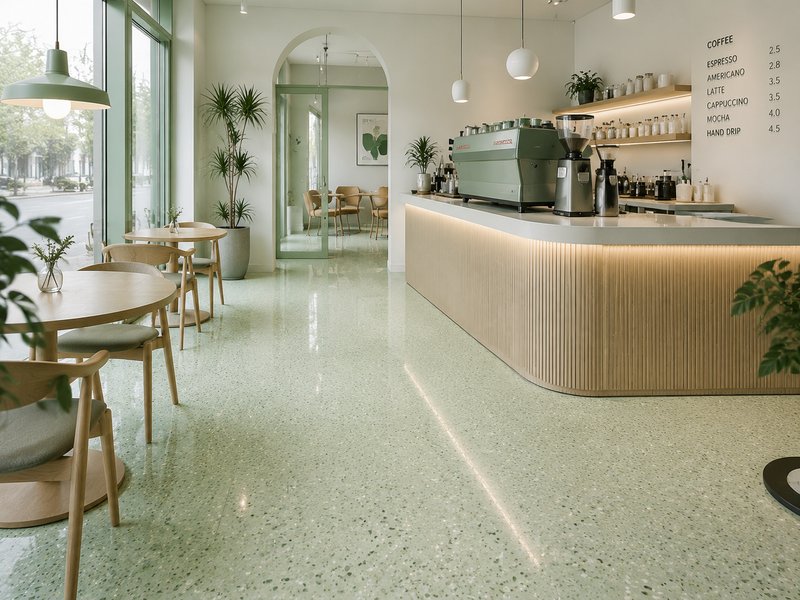
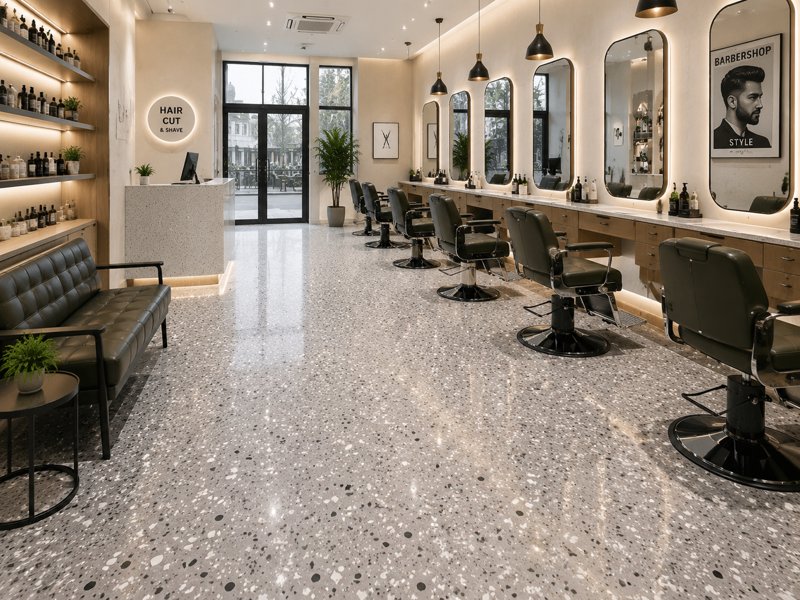
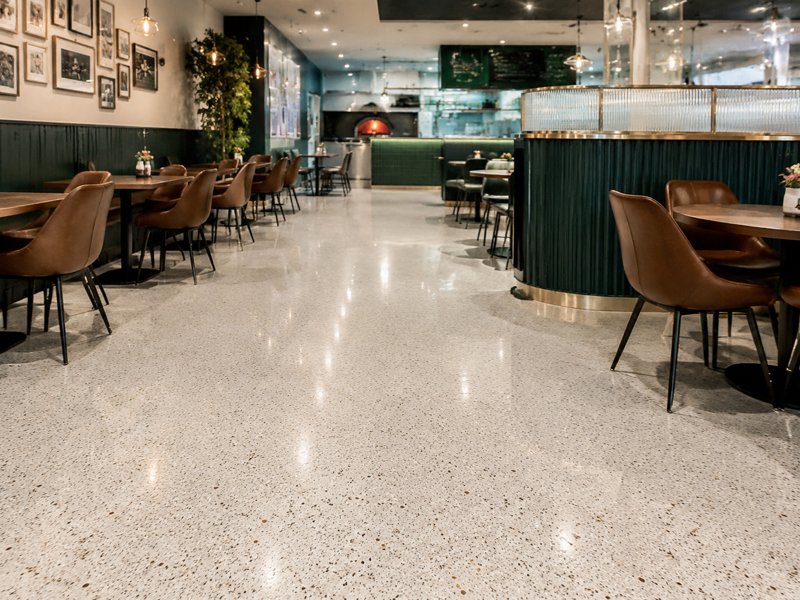
    Commercial floors are more than just "ground"—they're an extension of your brand image. water-based epoxy colored sand floor paint, with its customizable texture and environmentally friendly properties, has become a popular choice for shopping malls, cafés, and offices. However, the needs of different commercial settings vary greatly—shopping malls need "eye-catching," cafés need "atmosphere," and offices need "practicality." Today, we'll share specific stylizing tips for each.  1. Shopping Malls and Stores: Attract Customers with "Differentiated Textures"  Core Requirements: Highlight the brand's style while withstanding the wear and tear of high foot traffic (thousands of people per day).  Styling Options:  Fast fashion stores (such as clothing and accessories stores): Choose 0.5mm fine sand, primarily in pure white or light gray. Pair with a highly reflective water-based topcoat (with a mirror effect in some areas) to enhance the space's brightness and highlight the product colors. Cultural and Creative Handmade Stores: Choose 1-1.5mm coarse sand in Morandi colors (such as grayish pink and light green). Preserve the original texture of the sand and pair it with wooden shelves to create a "handmade" feel that complements the merchandise. Entrance Area: Choose 1.5-2mm coarse sand (anti-slip coefficient ≥ 0.6) to prevent customers from slipping in rainy weather. A "brand logo inlay" design (using different colored sand colors to create a logo) can be used to enhance recognition.  2. Cafes: Create a check-in atmosphere with a "textured" feel  Core Need: Create a "photography" atmosphere while ensuring easy cleanup after coffee spills.  Matching Options: Industrial Cafes: Choose 2mm coarse sand in cement gray and dark brown to preserve the rough texture of the sand particles. Paint the walls with cement paint and pair them with wrought iron tables and chairs to create a "retro warehouse" atmosphere. Copper strips can be embedded in the floor to separate areas. For a Japanese-inspired, relaxing cafe: Choose 0.3mm fine sand, using off-white or light wood tones, paired with a matte finish. Use irregular color blocks (e.g., off-white + light brown) for the floor. Add rattan chairs and greenery to reduce the commercial feel.  Details: The floor under the bar can be treated with a splash-proof finish (two coats of water-based finish) to prevent coffee stains from seeping through the gaps in the sand.  3. Office: Balance practicality and simplicity to improve work efficiency  Core requirements: The floor should be quiet (no noise when walking), stain-resistant (avoid frequent cleaning that disrupts work), and maintain the clean aesthetic of the space.  Styling options:  Open office area: Choose 0.5mm fine sand, using light gray or light blue (low-saturation colors can reduce visual fatigue), paired with a matte finish. Keep the floor clean and uncluttered. Conference Room/Reception Area: Choose a medium-sized sand particle size of 0.8mm and a dark gray or navy blue color (for a formal look). Create "line dividers" (using a darker shade of the same color) on the floor to demarcate seating areas.  Painter Room: Choose a coarse sand particle size of 1mm and a light brown color (for stain resistance). Create a slight slope (0.5%) on the floor to prevent water accumulation and ensure a satisfactory anti-slip coefficient.
    ЧИТАТЬ ДАЛЕЕ
  • The Complete Water-based Epoxy Colored Sand Floor Paint Application Process: From Base to Inspection, Every Step Dedicated to "Details"
    The Complete Water-based Epoxy Colored Sand Floor Paint Application Process: From Base to Inspection, Every Step Dedicated to "Details"
    Mar 18, 2026
    "30% Materials, 70% Construction"—the ultimate effect of water-based epoxy colored sand floor paint depends not only on product quality but also on a standardized application process. Its water-based properties and colored sand particles, in particular, place high demands on the construction environment and handling techniques. Today, we'll take you directly to the construction site and break down the "birth process" of a high-quality water-based epoxy colored sand floor.   1. Pre-construction Preparation: Three Essential "Surface Inspections"   Flatness Test: Measure with a 2-meter ruler, with an error of ≤3mm. If the surface exceeds the standard, level it with cement mortar (5-10mm thickness) and allow it to dry for 7 days before applying.   Moisture Content Test: The surface moisture content must be ≤8% (this can be checked with a hygrometer). Damp surfaces (such as basements) require a water-based moisture-proof primer to be applied and allowed to sit for 24 hours. Cleanliness: Remove dust, oil, and old coatings from the floor. Oil stains can be removed with an alkaline cleaner (such as dishwashing liquid mixed with water). Stubborn stains should be removed with sandpaper.   2. Core Construction Steps: 6 Steps to a "Textured Floor"   Step 1: Apply Water-Based Primer (1 Day)   Use the matching water-based epoxy primer and apply one even coat to enhance adhesion and prevent delamination later. Note: The primer should be diluted 10%-15% with water (as per the product instructions) and allowed to dry thoroughly for 24 hours after application.   Step 2: Repair Substrate Defects (0.5-1 Day)   Mix "water-based epoxy putty" and fine sand to make a patching paste. Fill cracks (<2mm) and holes in the floor. Once dry, sand with 120-grit sandpaper to smooth the surface.   Step 3: Apply the Middle Sand Layer (1 day)   Mix the water-based epoxy sand base material and the curing agent in the correct ratio (usually 1:1). Stir thoroughly and apply with a toothed scraper (the number of teeth depends on the sand particle size) to a thickness of 1-2mm, ensuring even distribution of the sand.   Step 4: Finishing (1-2 hours after finishing)   When the middle sand layer is semi-dry (not sticky to the touch), use a stainless steel spatula to gently finish it, avoiding any damage to the sand particles and removing scraper marks.   Step 5: Apply a Water-Based Topcoat (1 day)   When the middle sand layer is completely dry (24-48 hours), apply one or two coats of water-based epoxy topcoat (matte or semi-matte finish available) to improve surface wear resistance and gloss, leaving 12 hours between coats. Step 6: Curing and Maintenance (7 Days)   After construction, seal the site to prevent foot traffic and heavy objects from rolling over it. Allow the surface to fully cure for 7 days before normal use (avoid water washing for the first 3 days).   3. Acceptance Criteria: Four Tips for Determining Construction Compliance   Appearance: The colored sand particles are evenly distributed, with no noticeable color difference, bubbles, or sagging. The edges (corners, door frames) are straight and neat.   Texture: Touching the surface reveals distinct, non-irritating particles, and a smooth surface with no bumps (≤0.5mm tolerance allowed).   Performance: Scratch the surface with a key, no noticeable scratches. Sprinkle a small amount of water and let it sit for 24 hours, and no wrinkles or discoloration.   Environmental: After curing, a close-up sniff reveals no odor (including resin), meeting the basic "install and move-in ready" requirements.
    ЧИТАТЬ ДАЛЕЕ
  • Water-based Epoxy Colored Sand Floor Paint Buying Guide: 4 Dimensions to Avoid 90% of Pitfalls
    Water-based Epoxy Colored Sand Floor Paint Buying Guide: 4 Dimensions to Avoid 90% of Pitfalls
    Mar 25, 2026
    Thinking about installing water-based epoxy colored sand floor paint, but confused by terms like "sand particle size," "solids content," and "gloss"? Worried about buying a "fake waterborne" product (actually mixed with solvents) that might fail to meet environmental standards? This buying guide uses four key criteria: "Look, Smell, Check, and Ask" to help you choose a high-quality product with the best value.   1. Look for Ingredients: Look for "Pure water-based " and Avoid "Fake Environmentally Friendly" Products   High-quality water-based  epoxy colored sand must meet two key criteria:   Base Material Purity: The waterborne epoxy resin content must be ≥50%. Avoid products that are a mixture of "waterborne resin + solvent" (check the test report; if it contains ingredients like "xylene" or "toluene," reject it). Colored Sand Quality: Natural colored sand (such as quartz sand) with uniform particles and no impurities is preferred. Avoid artificially dyed sand (which fades easily). Take a sample and soak it in clean water for 24 hours. If the water changes color, it's low-quality sand.   2. Smell: The less odor, the better the environmental performance.   After opening the product barrel, high-quality water-based epoxy colored sand will have only a slight resinous smell (similar to paper) and no pungent odor. If a strong solvent odor (such as paint) is detected, it may contain organic solvents and may not meet environmental standards. This is easier to identify during application: Pure water-based products do not require strong ventilation during application, and the odor will completely dissipate within 24 hours.   3. Verify Qualifications: All three types of reports are essential.   Environmental Testing Report: This must include testing for VOC content, formaldehyde emissions, and heavy metals (lead and mercury). CMA certified reports (authoritative third-party testing) are preferred. Performance Test Report: Focus on "Abrasion Resistance" (≥500 revolutions with no noticeable wear), "Adhesion" (cross-cut test ≥1), and "Water Resistance" (no wrinkling or peeling after immersion for 72 hours).   Brand Qualification: Choose brands established for at least 5 years with physical stores. Avoid "three-no" products (no production date, no quality certificate, and no brand name).   4. Ask for Details: 3 Questions to Help You Identify Reliable Merchants   "Is the colored sand particle size optional?": High-quality merchants offer a variety of particle sizes, including 0.3mm (fine texture), 1mm (medium grain), and 2mm (coarse sand texture), and can be customized.   "Does the construction include base preparation?": A formal quote will include base preparation such as floor leveling and crack repair to avoid "extra costs" later.   "What is the warranty period?": High-quality products have a 5-8 year warranty (free repair for non-intentional damage). If the merchant only guarantees 1-2 years, be wary of the product quality.
    ЧИТАТЬ ДАЛЕЕ
  • What is water-based epoxy colored sand floor paint? A 5-minute guide to understanding its "environmental and aesthetically pleasing" qualities.
    What is water-based epoxy colored sand floor paint? A 5-minute guide to understanding its "environmental and aesthetically pleasing" qualities.
    Apr 01, 2026
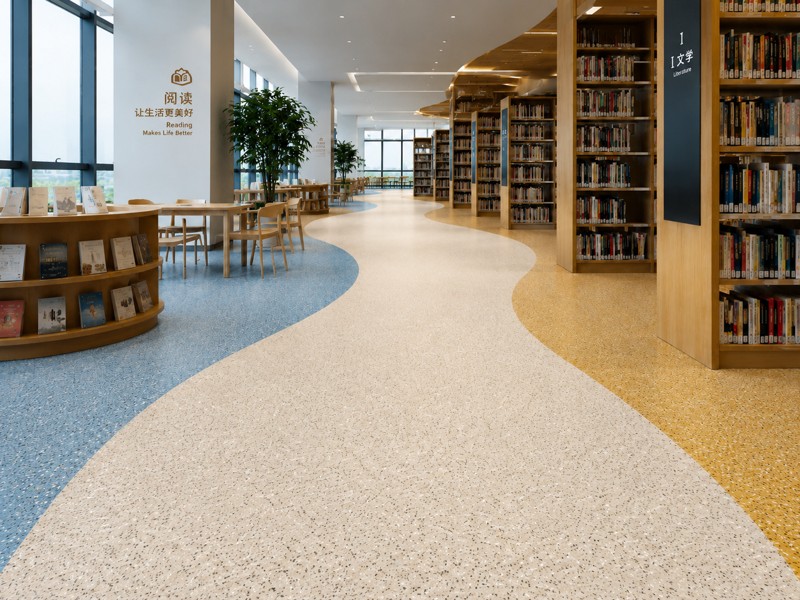
      When it comes to flooring, it's often difficult to balance environmental considerations with practicality. However, water-based epoxy colored sand floor paint breaks this deadlock. It combines the natural texture of colored sand with the low-toxicity of water-based paint, making it a new favorite in the recent renovation market. Today, let's take a 5-minute look at this flooring material that boasts aesthetic appeal, performance, and environmental friendliness.  1. Definition: More than just a "floor," it's a combination of environmental friendliness and aesthetic quality.  Water-based epoxy colored sand floor paint uses a water-based epoxy resin as a base, blended with natural colored sand (such as quartz sand or colored jade sand), and a water-based hardener. It creates a granular, textured floor coating by brushing or scraping. Compared to traditional solvent-based epoxy flooring, it requires no organic solvents for dissolution and has an extremely low VOC content. Compared to ordinary epoxy colored sand, it retains the anti-slip and wear-resistant properties of colored sand while being easier to apply and having less odor.  2. Core Features: Three Key Advantages Address Renovation Pain Points  Environmentally Friendly and Safe: VOC content is ≤100g/L (far below the national standard of 200g/L), resulting in no pungent odor during application and no release of formaldehyde or benzene after curing. It is suitable for sensitive areas such as children's rooms, elderly rooms, and schools.  Unique Texture: The colored sand particles are clearly visible (particle size optional, 0.1-2mm), creating a matte or semi-matte finish, eliminating the cold, mirror-like appearance of traditional flooring and providing a natural texture.  Durable and Durable: With a surface hardness of 2-3H, it is resistant to abrasion and impact. The colored sand is tightly bonded to the resin, resisting fading and delamination. It is particularly suitable for high-use areas such as kitchens, hallways, and garages.  3. Common Misconception: Don't Confuse It with "Ordinary Colored Sand Flooring"  Many people believe there's no difference between water-based epoxy and solvent-based epoxy. In fact, there are significant differences: water-based epoxy can be diluted directly with water during application, eliminating the need for a gas mask; solvent-based epoxy requires solvents like banana oil, which can have a strong odor and requires ventilation for at least a week. Furthermore, water-based epoxy is more flexible after curing and less prone to cracking due to temperature fluctuations, making it more suitable for colder northern regions.
    ЧИТАТЬ ДАЛЕЕ

оставить сообщение

оставить сообщение
Если вы заинтересованы в нашей продукции и хотите узнать более подробную информацию, пожалуйста, оставьте сообщение здесь, мы ответим вам, как только сможем.
представлять на рассмотрение

Дом

Продукты

WhatsApp

Связаться с нами

Start a Conversation

Hi! Click one of our members below to chat on