Water-Based Epoxy Colored-Sand Self-Leveling Flooring for Museums
Sep 15, 2026
Museums are spaces where history, art, culture and architecture come together. In addition to displaying valuable collections, a museum must provide a comfortable and visually harmonious environment for visitors. Flooring plays an important role in achieving this balance.
Water-based epoxy colored-sand self-leveling flooring is a decorative resin flooring solution that combines a distinctive surface appearance with practical performance. With a variety of colors, decorative aggregates and finish options, it can complement the architectural design of modern museums, art galleries and cultural exhibition spaces.
1. What Is Water-Based Epoxy Colored-Sand Flooring?
Water-based epoxy colored-sand flooring is a resin flooring system based on waterborne epoxy technology and decorative colored sand or other suitable aggregates.
Unlike conventional single-color epoxy flooring, colored-sand systems offer a wider range of visual effects, from subtle neutral tones to multi-colored decorative patterns.
Grey, beige, white, black and customized color combinations can be selected to complement different interior design concepts. Depending on the product formulation and project requirements, the system may include a suitable primer, a decorative colored-sand layer and a compatible protective finish.
The complete system should be selected according to the substrate condition, desired appearance and intended service environment.
2. Why Choose Epoxy Colored-Sand Flooring for Museums?
A Refined and Decorative Appearance
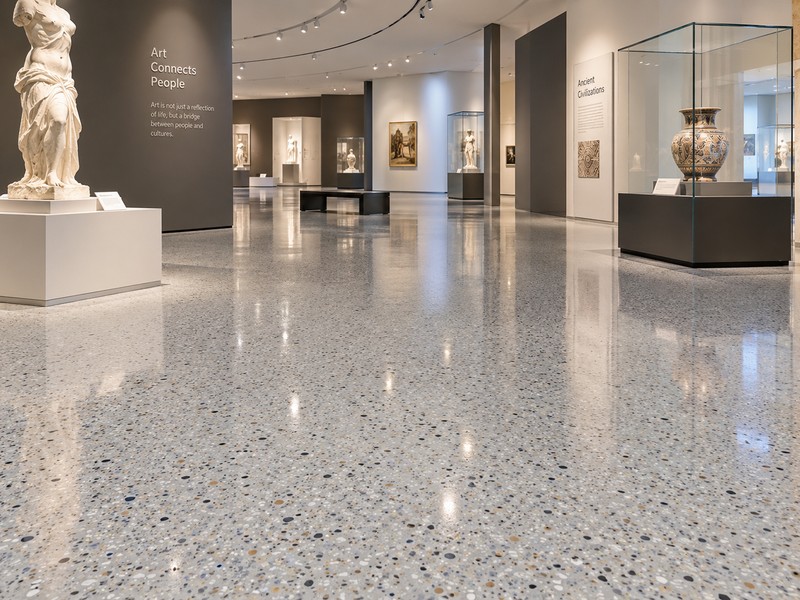
Museums often require flooring that complements sculptures, display cases, exhibition walls and architectural lighting without distracting visitors from the exhibits.
Colored-sand flooring offers a distinctive decorative texture that can create a clean, contemporary and visually consistent interior.
Neutral colors such as light grey, warm beige and off-white are particularly suitable for many modern exhibition spaces.
Seamless Appearance and Convenient Cleaning
A properly installed resin flooring system can provide a continuous surface with fewer joints than many conventional modular floor coverings.
This can simplify routine cleaning in suitable areas, including museum corridors, reception halls and public exhibition spaces.
Movement joints and other structural joints must still be designed and maintained appropriately.
Wear Resistance for Daily Visitor Traffic
Museum entrances, corridors and galleries may experience regular pedestrian traffic throughout the day.
A properly specified epoxy flooring system can provide suitable wear resistance for these areas. Actual performance depends on the resin formulation, coating thickness, substrate preparation, installation quality and maintenance practices.
Project specifications and relevant test data should be reviewed before selecting the flooring system.
Water-Based Technology
Water-based epoxy coatings use water as a principal dispersion medium and can reduce reliance on organic solvents compared with conventional solvent-based alternatives.
However, water-based does not automatically mean zero VOC or completely odor-free. Always check the product's technical data, VOC test results and applicable indoor air quality requirements.
Flexible Colors for Different Museum Designs
Different museum environments can benefit from different decorative finishes:
Modern art museums: light grey, dark grey or black-and-white color combinations.
History museums: warm beige, natural stone-inspired or soft grey finishes.
Science and technology museums: contemporary neutral colors and clean visual lines.
Cultural exhibition spaces: customized colors that complement the architectural concept.
3. Where Can Museum Epoxy Colored-Sand Flooring Be Used?
Museum Entrances and Reception Halls
The entrance and reception area create the first impression for visitors. Decorative colored-sand flooring can complement reception desks, information counters and modern architectural features.
Permanent Galleries and Temporary Exhibition Halls
Colored-sand flooring may be suitable for permanent galleries, temporary exhibitions and selected art display spaces.
The floor color and surface finish should be coordinated with the exhibits, lighting and exhibition layout to maintain a balanced visual environment.
Visitor Corridors and Public Walkways
Continuous decorative flooring can be a practical option for many indoor circulation areas.
For high-traffic walkways, particular attention should be given to wear resistance, slip resistance, cleaning procedures and long-term maintenance.
Educational and Multipurpose Areas
Museum classrooms, workshops, meeting rooms and multipurpose spaces may also benefit from decorative resin flooring, provided the selected system meets the requirements of each area.
Museum Shops and Visitor Lounges
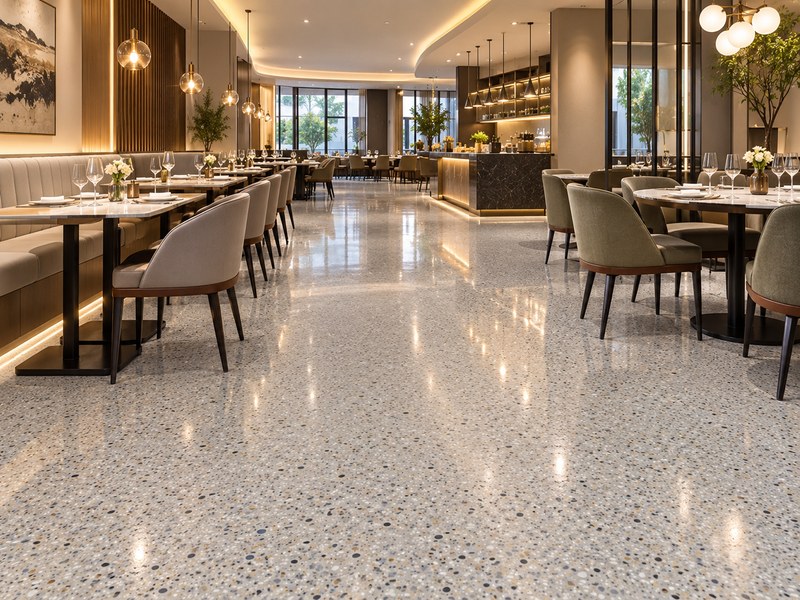
Museum gift shops, cafés and visitor lounges can use coordinated colored-sand finishes to maintain a consistent interior design throughout the building.
Specialized collection storage areas and sensitive artifact display environments require separate evaluation of emissions, environmental conditions, static control and other project-specific requirements.
4. Installation Considerations
Proper substrate preparation and installation are essential for achieving a reliable finish.
Step 1: Inspect and prepare the substrate
Check the concrete substrate for strength, flatness, moisture conditions and contamination. Mechanically prepare the surface and repair defects as required by the flooring system.
Step 2: Apply a compatible primer
Select a suitable water-based epoxy primer according to the substrate and product specifications. Allow the primer to cure as recommended before proceeding.
Step 3: Install the decorative colored-sand layer
Follow the specified mixing ratio, working time, application thickness and installation method. Maintain consistent color distribution and decorative texture throughout the area.
Step 4: Apply the compatible finishing coat
Choose a suitable protective finish according to the required appearance, wear resistance, cleaning procedures and slip-resistance requirements.
Step 5: Allow adequate curing
Follow the manufacturer's curing instructions before allowing foot traffic or introducing cleaning equipment. Protect the newly installed floor from water, contamination and premature use.
Mixing ratios, coverage rates, curing times and total system thickness must always be confirmed using the technical data sheet for the actual product.
5. How to Select the Right Flooring System for a Museum
Before specifying water-based epoxy colored-sand flooring, project owners, architects and contractors should evaluate the following factors:
Decorative color and texture compatibility with the interior design.
Wear resistance for the expected level of visitor traffic.
Slip resistance under both dry and relevant wet conditions.
Compatibility with the planned cleaning products and maintenance procedures.
VOC emissions and indoor air quality requirements.
Concrete substrate condition and moisture limitations.
Installation conditions, curing time and project schedule.
The most appropriate flooring system is one that balances decorative quality, practical performance and the specific requirements of the museum environment.
6. Conclusion
Water-based epoxy colored-sand self-leveling flooring offers a versatile decorative flooring option for suitable museum galleries, reception halls, visitor corridors and cultural spaces.
With carefully selected colors, decorative aggregates and compatible finishing coats, it can create a modern and cohesive interior while supporting routine cleaning and daily use.
If you are a flooring contractor, building materials distributor, architectural firm or project purchaser, contact a professional flooring manufacturer to learn more about water-based epoxy colored-sand flooring systems, technical specifications and OEM/private-label cooperation opportunities.
ЧИТАТЬ ДАЛЕЕ






 Поддерживается сеть IPv6
 Русский