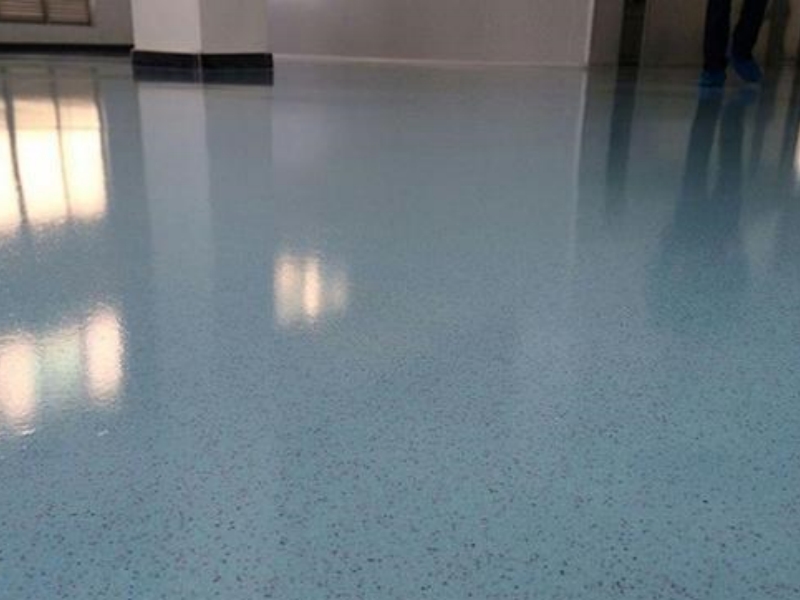
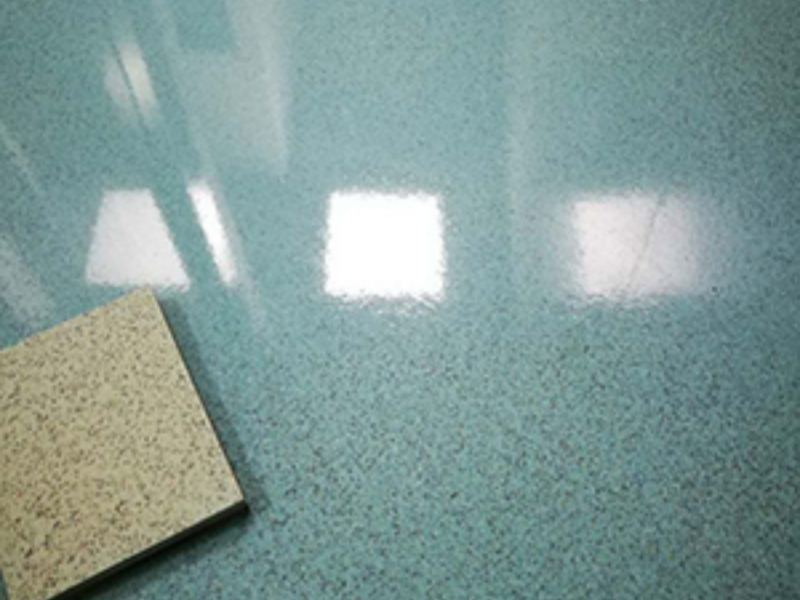
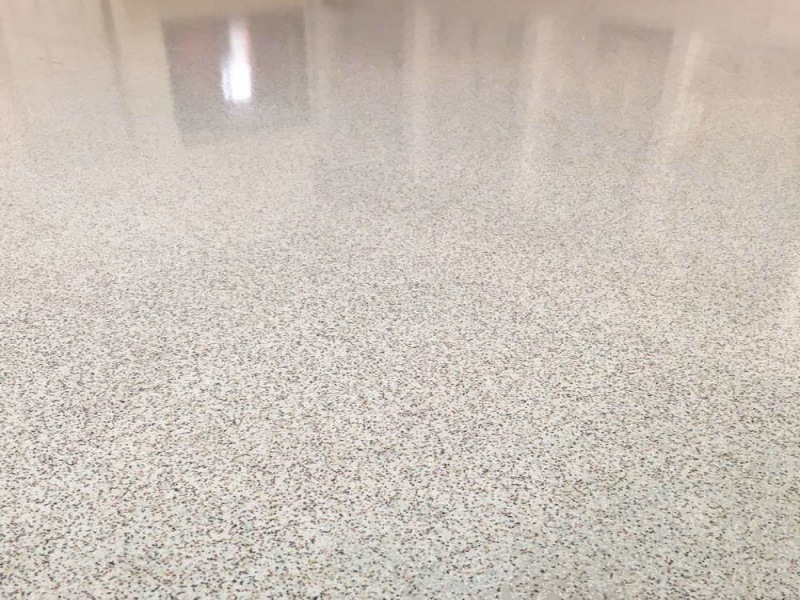
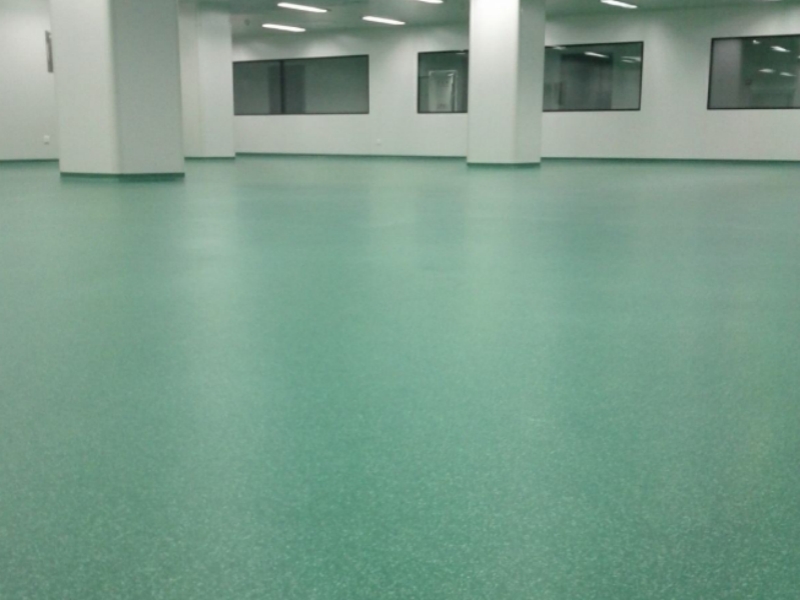
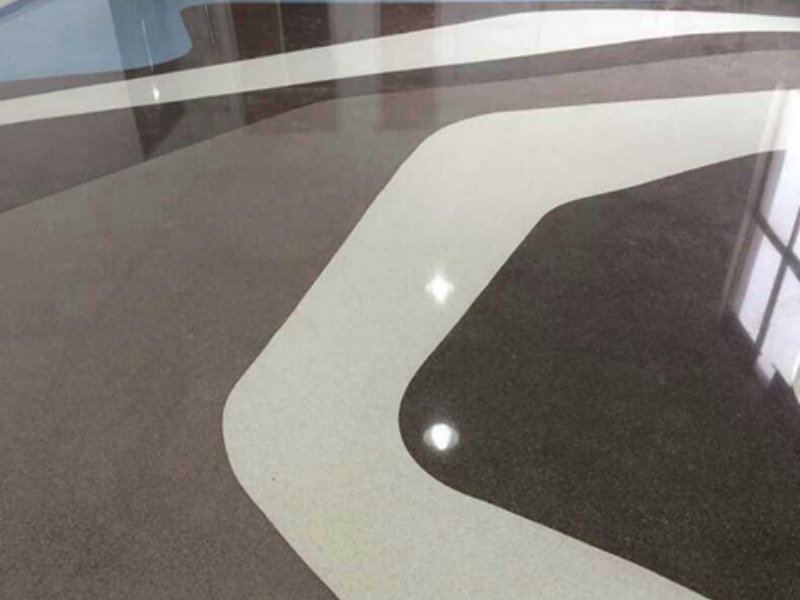
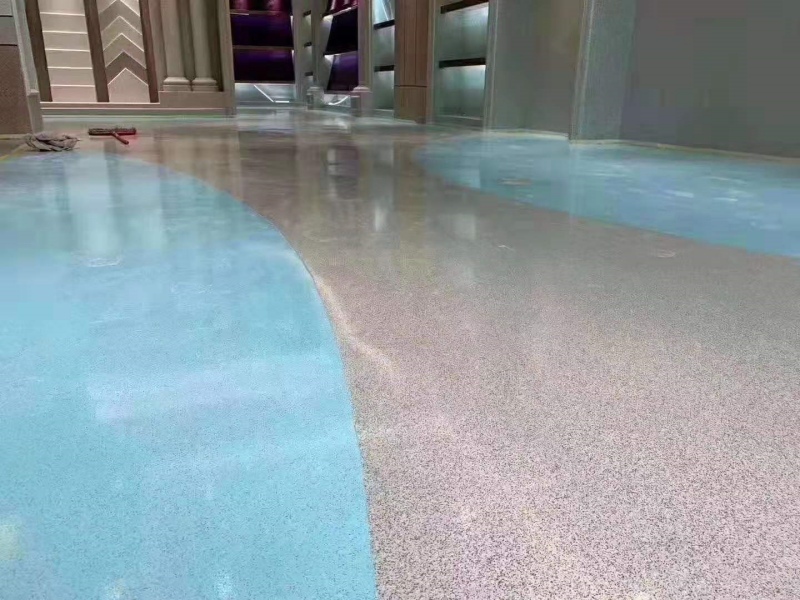
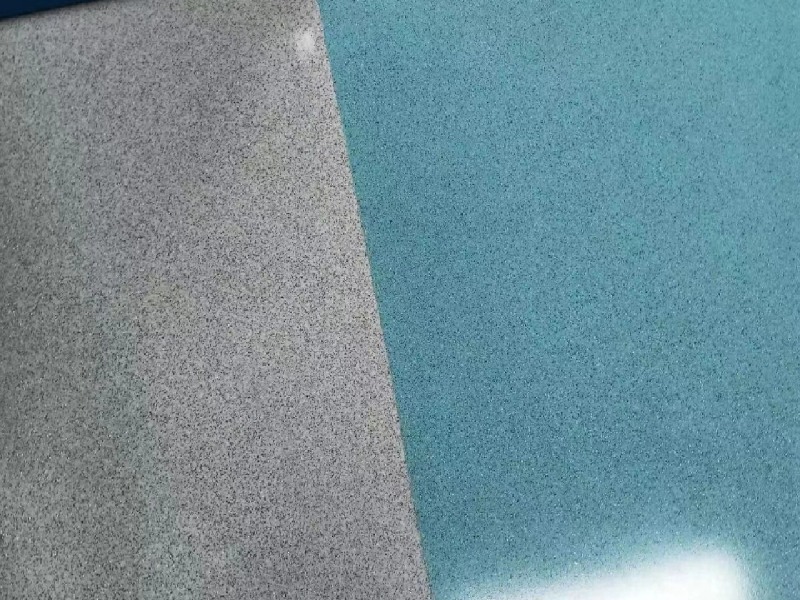
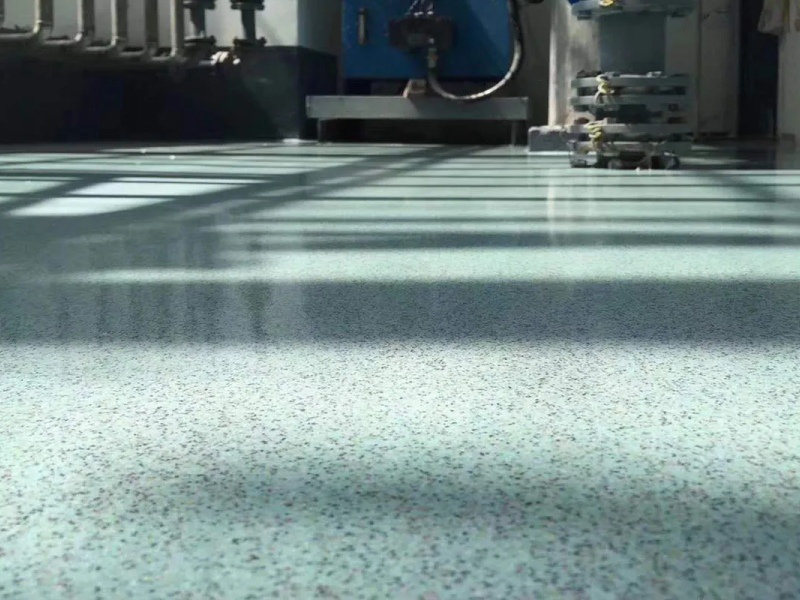
Эпоксидная краска для пола на водной основе с песочным рисунком

Дом

Эпоксидная краска для пола на водной основе с песочным рисунком

  • Water-Based Epoxy Color Sand Floor coatings: Ideal Flooring for Gyms and Fitness Rooms
    Water-Based Epoxy Color Sand Floor coatings: Ideal Flooring for Gyms and Fitness Rooms
    May 18, 2026
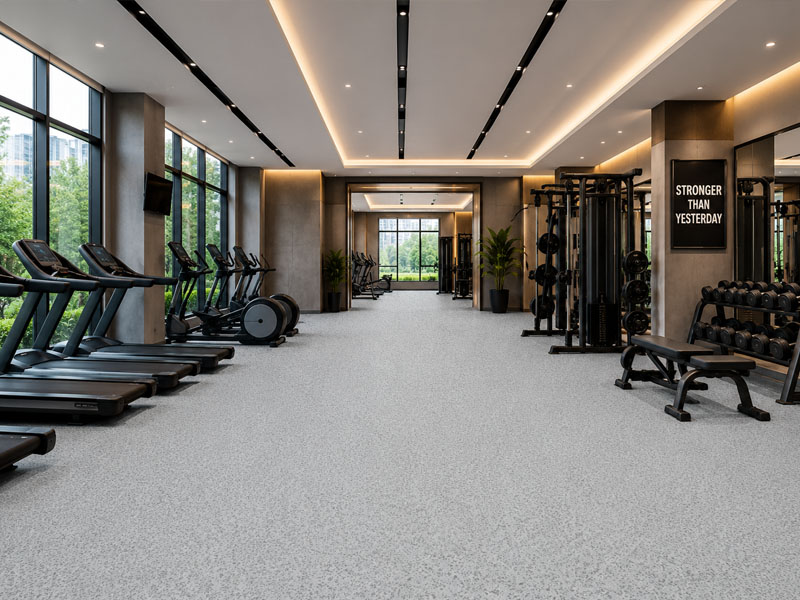
      Gym and fitness room floors require high slip resistance, durability, and hygiene to cope with daily high-intensity exercise and heavy foot traffic.   Traditional tiles and ordinary floors are slippery when wet, easy to wear, and difficult to clean, which cannot meet professional gym standards. For this reason, water-based epoxy color sand floor coatings has become the most popular choice for modern commercial gyms, yoga studios, and training centers. This water-based floor coating features low VOC, zero odor, and environmental safety, making it suitable for long-term indoor use. Its unique fine sand granular surface provides excellent anti-slip performance both dry and wet, effectively preventing falls caused by sweat and water stains during workouts.   With high hardness and strong wear resistance, the floor resists frequent trampling, equipment movement, and daily friction without peeling or fading. The seamless and dense structure leaves no gaps for dust, bacteria, or dirt accumulation. It is easy to clean and maintain, always keeping the gym floor fresh and hygienic.   In addition, water-based epoxy color sand coatings supports custom colors and matte finishes, creating a modern, energetic, and professional sports environment. It is the perfect cost-effective flooring solution for gym renovation and new construction projects.
    ЧИТАТЬ ДАЛЕЕ
  • Water-Based Epoxy Color Sand Floor Coating: Features, Applications and Installation Guide
    Water-Based Epoxy Color Sand Floor Coating: Features, Applications and Installation Guide
    May 08, 2026
    1. What Is Water-Based Epoxy Color Sand Floor Coating? Water-based epoxy color sand floor coating is a new type of green environmental protection flooring material. It uses water-based epoxy resin as the main material and mixes with special colored quartz sand. After professional on-site mixing and roller coating or trowel construction, it forms a seamless, dense, uniform, and high-grade floor surface. Different from ordinary plain epoxy floor paint, color sand floor coating has natural granular texture, rich color layers, and a matte or semi-gloss finish. It avoids the problem of dazzling high-gloss reflection and provides a more comfortable and advanced visual effect. 2. Core Advantages of Water-Based Epoxy Color Sand Flooring Eco-friendly and Low VOC Water-based formula uses water as the dilution medium, no strong pungent odor, low VOC content, and meets international environmental protection standards such as CE and SGS. It can be constructed in occupied spaces and is very suitable for indoor closed environments. Seamless and Easy to Clean The integral seamless floor surface does not hide dust or bacteria. The dense coating effectively resists daily dust, oil stains, and dirt. Daily cleaning only requires simple mopping, which greatly reduces later maintenance costs. Excellent Wear and Scratch Resistance After curing, the color sand floor forms a high-hardness protective layer. It can resist frequent pedestrian walking, light trolley rolling, and daily friction, ensuring long-term service life in high-traffic areas. Anti-slip and Safe The fine granular texture provides stable anti-slip performance, even when the floor is slightly wet. It effectively prevents slipping accidents and is safer than ordinary smooth epoxy floors. Rich Colors and High Aesthetics Color sand supports customized color matching, including gray series, blue series, green series, beige series, and mixed color styles. The overall texture is natural, high-end, and not easy to fade, perfectly matching modern minimalist, industrial, and commercial decoration styles. 3. Main Application Scenarios Commercial Spaces Shopping malls, exhibition halls, office buildings, studios, and gyms prefer water-based color sand floor coating because of their high-grade texture, no odor after construction, and fast delivery. Industrial Workshops Electronics factories, food workshops, pharmaceutical workshops, and light industrial factories require clean, dust-free, and environmentally friendly floors. Water-based color sand is dust-proof, antibacterial, and compliant with industrial clean standards. Underground Parking Garages Garages need anti-slip, wear-resistant, and stain-resistant floors. Color sand garage floors can effectively solve tire friction marks, dust, and slippery problems, while improving the overall grade of the parking lot. Residential Interior Flooring More families choose water-based epoxy color sand floor coating for living rooms, corridors, and duplex building floors. No formaldehyde, seamless integration, and customizable colors make the whole house more simple and advanced. 4. Standard Installation Process Step 1: Floor base treatment — Grind, level, and remove dust to ensure a flat and solid base surface. Step 2: Primer coating — Roll water-based epoxy primer to enhance adhesion and seal the base floor. Step 3: Color sand mortar coating — Mix colored sand and water-based epoxy resin evenly, trowel or roll to form the main texture layer. Step 4: Topcoat protection — Apply transparent water-based topcoat to enhance wear resistance, anti-fouling, and gloss uniformity.
    ЧИТАТЬ ДАЛЕЕ

  • Who is best suited for water-based epoxy colored sand floor paint? Five precise matchmaking groups, no more confusion!
    Who is best suited for water-based epoxy colored sand floor paint? Five precise matchmaking groups, no more confusion!
    May 06, 2026
    "Is water-based epoxy colored sand floor paint suitable for my home?" Many people have this question during renovations. The truth is, there's no "one-size-fits-all" flooring material, only "suitable" groups. Today, we've summarized five groups most suited for water-based epoxy colored sand floor paint, and based on their core needs, we'll help you quickly determine if you fit the bill.   1. Families with elderly and children - Prioritize "environmental safety" Core needs: The floor should be non-toxic, non-slip, and resistant to bumps and bruises, preventing children from chewing on it and elderly people from slipping and injuring themselves. Reasons for Suitable: Water-based epoxy colored sand floor paint has a low VOC content (≤100g/L) and releases no formaldehyde or heavy metals after curing, making it suitable for barefoot children. The medium sand particle size (0.5-1mm) and matte finish provide an anti-slip coefficient of ≥0.6, preventing elderly people from slipping. The high surface hardness prevents children from jumping and toys from bumping into it, and subsequent cleaning requires only a damp cloth, saving time and effort.   Recommended Solution: Use light gray and off-white 0.5mm fine sand (matte finish) throughout the home. Add cartoon mosaics to the children's room. Use 1mm medium sand for enhanced anti-slip properties around the kitchen and bathroom doorways.   2. Pet-Friendly Homes - Addressing the Pain Points of "Scratching and Urine Stains" Core Requirements: Floors should be scratch-resistant, urine-resistant, and easy to clean, preventing damage from pets and urine odors. Suitable for: Water-based epoxy colored sand floor paint has a surface hardness of 2-3H, leaving no visible scratches from pet claws. The acid- and alkali-resistant topcoat resists pet urine, leaving no traces within 12 hours. The seamless design traps fur, allowing daily vacuuming without frequent mopping (to prevent slippery, damp feet).   Recommended: Use light brown and dark green 0.8mm medium sand (matte finish) throughout the home. Create a 0.5% slope (inclining toward the drain) in the pet restroom area, and partially thicken the floor in the eating area to 2mm.   3. Renovators of older homes – Seeking "saving time, effort, and no disruption to neighbors"   Core needs: Avoiding the cost of demolishing the old floor (which is costly and disruptive), ensuring no reduction in floor height after renovation, and enabling quick move-in. Suitable for: Water-based epoxy colored sand floor paint can be applied directly onto smooth, old tile or concrete floors (no brick removal required), shortening the construction period by 3-5 days and reducing neighborhood complaints. With a total thickness of only 1-2mm, it preserves the valuable height of older homes (especially suitable for homes with ceilings under 2.7 meters). It's environmentally friendly and can be moved in 7-15 days after application, allowing for ventilation and eliminating the need for long-term rental transitions.   Recommended: Sand the old tile floor before applying directly. Choose a 0.5mm fine sand that matches the original floor color, and create a patchwork pattern to cover imperfections in the old floor.   4. Basement Renovation - Overcoming the "Moisture and Mold" Challenge   Core Requirements: Moisture-resistant, moisture-resistant, and wear-resistant flooring for basement conversion into storage, garage, or media room. Reasons for selection: The water-based epoxy colored sand  floor paint  seamless sealant + moisture-proof primer blocks moisture penetration from the basement, preventing water seepage and mold growth during the rainy season. The surface is moisture-resistant and mildew-resistant, preventing mold growth even in poorly ventilated basements. Its high pressure resistance allows it to withstand the weight of storage racks and vehicles, making it suitable for a variety of basement functions.
    ЧИТАТЬ ДАЛЕЕ
  • Common Myths About Water-Based Epoxy Colored Sand Floor Paint Debunked: 5 Misconceptions to Avoid!
    Common Myths About Water-Based Epoxy Colored Sand Floor Paint Debunked: 5 Misconceptions to Avoid!
    May 05, 2026
    Myth 1: Water-Based Epoxy Colored Sand is Not Abrasion-Resistant and Will Flake Off After One Year   Truth: High-quality water-based epoxy colored sand floor paint has a surface hardness of 2-3H and an abrasion resistance coefficient ≥0.5g/1000 revolutions (national standard requirement ≤0.8g/1000 revolutions). With normal household use (average daily foot traffic ≤100), it can last 8-15 years and won't flake off after one year.   Causes of flake off: Most often due to purchasing inferior product (poor compatibility between colored sand and resin) or an imbalance in the ratio of colored sand to curing agent during application (too little curing agent), rather than inherent abrasion resistance of the water-based paint.   Verification Method: Ask the merchant for an "Abrasion Resistance Test Report" when purchasing, and supervise workers during application to ensure they mix the materials according to the product instructions.   Myth 2: Water-based epoxy floor paint is less durable than solvent-based epoxy floor paint.   Truth: The core difference between the two lies in the solvent, not durability. High-quality water-based epoxy floor paint  and solvent-based epoxy floor paint offer similar abrasion and compression resistance, but water-based paint is more environmentally friendly (lower VOC content) and more flexible (elongation at break ≥20%, compared to approximately 10% for solvent-based flooring). It is also less susceptible to cracking due to temperature fluctuations, making it suitable for colder northern regions.   Myth: Some people believe that "solvent-based flooring has a stronger odor = more durable." In reality, the strong odor is due to the presence of large amounts of organic solvents and has nothing to do with durability.   Myth 3: Floors become slippery in rainy weather, making them unsafe for the elderly and children.   Truth: Water-based epoxy floor paint contains inherent colored sand particles with an anti-slip coefficient of ≥0.5 (the national standard requires ≥0.5 for public spaces and ≥0.4 for homes). When water accumulates on rainy days, the gaps between the particles allow water to escape, making it more slip-resistant than smooth ceramic tiles (with an anti-slip coefficient of approximately 0.3). Slippery Causes: Selecting fine sand (<0.3mm) with glossy topcoat (surface too smooth), or greasy floor stains (greasy floor stains reduce the anti-slip coefficient). Solution: For homes and public spaces, prefer medium sand (0.5-1mm) with matte topcoat, and clean the floor regularly.   Myth 4: The space needs to be ventilated for 3 months after construction before moving in.   Truth: High-quality water-based epoxy colored sand floor paint has a VOC content of ≤100g/L, has no noticeable pungent odor during construction, and releases ≤0.03mg/m³ (formaldehyde) after curing (7 days). Ventilation is sufficient for 7-15 days before moving in, eliminating the need for a "3-month ventilation" period.   Source of Misconception: Confusion between "water-based paint" and "solvent-based paint." Solvent-based epoxy floor paint, due to its high VOC content (≥300g/L), requires 1-3 months of ventilation, while water-based paint does not. Verification method: Test with a formaldehyde detector after construction. If the readings meet the standard, you can move in.   Myth 5: The brighter the color, the less environmentally friendly it is.   Truth: The environmental friendliness of water-based epoxy colored sand floor paint depends on the resin purity and solvent content, not the color. High-quality, bright colors (such as red and blue) use inorganic pigments (which are environmentally friendly and non-toxic), and their VOC content can also be ≤100g/L. Low-quality, light-colored paints that contain organic solvents will also fail to meet environmental standards. Avoidance method: Regardless of the color, always check the environmental test report (focusing on VOC, formaldehyde, and heavy metal content) rather than judging based solely on color.
    ЧИТАТЬ ДАЛЕЕ
  • Pairing Water-based Epoxy Colored Sand Floor Paint with Soft Furnishings: Three Principles + Scene Design to Enhance the Sense of Luxury
    Pairing Water-based Epoxy Colored Sand Floor Paint with Soft Furnishings: Three Principles + Scene Design to Enhance the Sense of Luxury
    May 02, 2026
    1. Three Key Coordination Principles to Avoid Overdoing It   Color Coordination: Follow the "6:3:1" rule: The floor color should account for 60% of the space's color palette (primary color), the walls 30% (secondary color), and the soft furnishings (curtains, pillows) 10% (accents). For example: Choose light gray colored sand for the floor (primary color), off-white latex paint for the walls (accents), and light blue for the curtains and pillows (accents) for a harmonious, seamless overall look.   Textural Complementarity: Balancing "hard" and "soft": Water-based epoxy colored sand (especially coarse sand) has a "hard" grainy texture and needs to be balanced with softer soft furnishings—such as fabric sofas, carpets, and cotton and linen curtains. Avoid using only hard materials like metal and glass, which can create a cold, stark impression. Consistent Style: The floor texture should match the overall style: For a modern minimalist look, choose fine sand (0.3-0.5mm) with a matte finish, perfect with minimalist furniture; for a retro look, choose coarse sand (1-1.5mm) with a distressed finish, perfect with vintage wood and leather furniture; for an industrial look, choose dark gray coarse sand, perfect with iron and concrete soft furnishings to avoid mixing styles.   2. Apply the matching scheme to different spaces directly   Living Room: Emphasize "Warmth and Practicality"   Floor: Light gray 0.5mm fine sand (matte finish), versatile with any furniture.   Soft Furnishings:   Furniture: Natural wood-colored fabric sofa (soft texture to offset the graininess of the floor), black metal coffee table (with a few touches of cool, hard texture).   Walls: Off-white latex paint, with a simple linear painting (the color matches the sofa cushions).   Floor: Light gray low-pile rug (placed in front of the sofa to avoid blocking the floor texture), with matching cushions in the same color.​ Bedroom: Create a "Quiet and Comfortable" Atmosphere   Floor: Light brown 0.3mm fine sanding (matte finish), warm and non-glaring.   Soft Furnishings:   Furniture: White solid wood bed (warm texture harmonizes with the floor), light brown bedside table (matches the floor color to enhance unity).   Walls: Light beige latex paint, warm-toned abstract painting above the bed.   Floor Decoration: White plush mat next to the bed (easy to walk on barefoot), light brown linen curtains (transparent and non-glaring).   Café: Create a "Retro and Artistic" Check-in Spot   Floor: Caramel 1.5mm coarse sanding (distressed finish), with a vintage feel.   Soft Furnishings:   Furniture: Dark brown leather sofa (matches the floor color to enhance the retro feel), natural wood solid wood tables and chairs (warm texture neutralizes the coarse sand particles). Walls: Cement paint (partial) + off-white latex paint (main body). Hang retro posters and wooden shelves (for plants and books). Lighting: Warm yellow pendant lamp (2.2-2.5 meters above the floor). The light shines on the floor, highlighting the texture of the colored sand particles.   3. Avoiding Pitfalls: 3 Coordinating Mistakes Don't Choose "Highly Saturated Colors" for Floors with "Highly Saturated Colors" for Soft Furnishings: For example, a red floor with an orange sofa can be too visually impactful and cluttered. It's recommended to pair a high-saturated floor (such as dark green or caramel) with low-saturated soft furnishings (white, gray, or beige). Don't overlook the impact of lighting on the floor: For basements and dark living rooms, choose a light-colored floor (such as off-white or light gray) and pair it with ceiling lights and spotlights to brighten the space. For bright living rooms, choose a dark floor (such as dark gray) and a warm-glowing pendant lamp to create a calming atmosphere. Don't use heavy carpeting for the entire floor: The texture of water-based epoxy colored sand floor paint is its highlight, and a full carpet will completely obscure it. Instead, use small rugs (≤ 1/3 of the floor area) to enhance the space without sacrificing the floor's aesthetic appeal.
    ЧИТАТЬ ДАЛЕЕ
  • Water-Based Epoxy Colored Sand Floor Paint Renovation Guide: 3 Situations with Targeted Treatment for a Cost-Effective and Effective Solution
    Water-Based Epoxy Colored Sand Floor Paint Renovation Guide: 3 Situations with Targeted Treatment for a Cost-Effective and Effective Solution
    Apr 27, 2026
    After 5-8 years, water-based epoxy colored sand floor paint may experience problems such as loss of gloss, localized scratches, and minor delamination. Targeted renovations can restore its beauty without requiring a complete overhaul. Today, we'll share renovation tips for three common situations to help you save over 50% in renovation costs. Situation 1: Gloss loss and shallow scratches only (no delamination or color shift) Cause: Long-term friction wears away the surface finish, causing it to lose its gloss and develop hairline scratches. Renovation Steps: Step 1: Clean the floor thoroughly with a neutral detergent and a soft mop to remove oil and dust. Allow to dry. Step 2: Lightly sand the floor using 1000-grit sandpaper (attached to a belt sander) to evenly polish the floor, removing any aging paint and exposing the fresh sand layer (avoid over-sanding, exposing the base layer). Step 3: Reapply a topcoat. Apply 1-2 coats of the same brand and type of water-based epoxy topcoat (matte/gloss finish, matching the original surface), leaving 12 hours between coats. Once dry, the gloss will be restored and the scratches will disappear. Situation 2: Localized, minor delamination and fading (delamination area <10%) Cause: The base layer is partially damp, the edges were not properly prepared during construction, or the surface was exposed to direct sunlight, causing fading. Renovation Steps: Step 1: Remove the damaged area. Use a utility knife to cut along the delamination edge and remove the delamination sand layer (until the base layer is smooth). Sand the base layer to remove any remaining adhesive. Step 2: Prepare the base. If the base is damp, apply one coat of moisture-proof primer. If the base is dry, apply one coat of epoxy primer and let dry. Step 3: Fill the sand layer. Mix water-based epoxy sand of the same brand and hardener according to the original sand particle size (e.g., 0.5mm). Scrape and apply until flush with the original surface. Use a spatula to smooth the surface when it is partially dry to ensure a consistent texture. Step 4: Apply a topcoat. After the sand layer is completely dry (24 hours), apply one to two coats of the same type of topcoat. If the original floor has a patterned pattern, align the edges of the pattern to avoid color differences. Situation 3: Extensive delamination and cracking (damage area > 30%) Cause: Inadequate base preparation during original construction (e.g., lack of moisture-proofing), poor material quality, or cracking due to building subsidence. Renovation Steps: Step 1: Remove the entire old floor, scraping away all the colored sand layers until the base layer is exposed, and clear away any construction debris. Step 2: Thoroughly repair the base layer. Fill cracks in the cement base with epoxy mortar, remove any hollow areas, and re-cast cement mortar, ensuring a flatness tolerance of ≤3mm. Apply two coats of moisture-proof primer. Step 3: Reapply the colored sand layer, following the standard construction process for new floors (primer → mid-coat → topcoat). If the original look is desired, the original grain size and color of the colored sand must be replicated.
    ЧИТАТЬ ДАЛЕЕ
  • Water-based Epoxy Colored Sand Floor Paint Cost Control Guide: 4 Tips to Save 30% Without Sacrificing Quality
    Water-based Epoxy Colored Sand Floor Paint Cost Control Guide: 4 Tips to Save 30% Without Sacrificing Quality
    Apr 22, 2026
    Many people think water-based epoxy colored sand floor paint  is expensive, but with proper planning, you can save a lot of money without sacrificing quality. Today, we'll share four practical cost-control tips from three perspectives: material selection, construction optimization, and design plan, to help you avoid the "high price trap." 1. Choose the Right Materials: Don't blindly pursue "imported" products; high-quality domestic products offer better value for money. Choose a top-tier domestic resin brand: Imported water-based epoxy resin is 50% more expensive than domestically produced ones. However, top-tier domestic brands (such as Sanke Trees and Nippon Paint) offer resins with a purity of ≥95%, meet environmental and durability standards, and come with complete testing reports, making them a viable alternative to imported products. Choose local natural sand: Imported colored sand requires additional shipping costs (approximately 5-10 yuan/㎡). Local quartz sand and colored jade sand (such as those from Shandong and Jiangsu) are of comparable quality, 20% cheaper, and have a stable supply, preventing shortages and project delays. Packages are more cost-effective than buying them individually: Most brands offer a "primer + mid-coat colored sand + topcoat" package, which is 15%-20% cheaper than buying them separately and offers better compatibility (avoiding issues caused by incompatibility between brands). 2. Construction Optimization: Reduce "extra charges" and lower labor costs. Do the "preliminary base treatment" yourself: The construction team charges approximately 20-30 yuan/㎡ for base treatment (leveling and caulking). If the existing floor is flat, you can sand it yourself and repair minor cracks (purchase epoxy repair agent online for 5 yuan/㎡), saving labor. Choose "regular colors" for no customization fee: Special colors (such as Morandi colors or contrasting colors) require an additional customization fee of 10-15 yuan/㎡. Regular colors (light gray, off-white, dark brown) are in stock at no extra charge and are more stain-resistant and versatile. Avoid peak construction season: March to May and September to November are peak renovation seasons, and construction costs are 15% higher than off-season (December to February). If time permits, choosing off-season construction offers better value for money. 3. Simplify the design: Avoid over-design and prioritize practicality. Use a solid color for large areas and create small mosaics in selected areas: Complex mosaics throughout the house (such as geometric patterns) are 30 yuan/㎡ more expensive than a solid color. It's recommended to use a solid color for large areas, with small mosaics (such as 1-2m diameter circles) limited to the entryway and living room. This creates a sense of design while also controlling costs. Use a uniform particle size to reduce waste: Using different particle sizes for different areas (e.g., 0.3mm in the living room and 1mm in the kitchen) will increase material waste (approximately 5%). If necessary, use a medium-sized sand of 0.5-1mm throughout the house to address the needs of each area and reduce waste. 4. Save money after sales: Choose brands with long warranties to reduce future repairs. Prefer brands with a warranty of 5 years or more. Brands with a 1-2 year warranty will incur repair costs (approximately 50 yuan/㎡) for any delamination or fading. Brands with a 5-8 year warranty offer free repairs for non-human damage, making them more cost-effective in the long run. Retain "leftover materials": After construction, have the construction team retain a small amount of colored sand and topcoat (storage in a sealed container). This allows for minor repairs without having to re-purchase (avoiding the costly and difficult color matching of small quantities).
    ЧИТАТЬ ДАЛЕЕ
  • Water-Based Epoxy Sand floor paint for Children's Room Floors: Safe, Fun, and Durable—Three Key Requirements Meet at Once
    Water-Based Epoxy Sand floor paint for Children's Room Floors: Safe, Fun, and Durable—Three Key Requirements Meet at Once
    Apr 20, 2026
    Children's room floors must be safe and non-toxic, withstand children's jumping and graffiti, and create a playful atmosphere. Water-based epoxy sand floor paint, with its environmentally friendly, wear-resistant, and customizable patterns, is an ideal choice for children's room floors. Today, we'll share the key design and installation tips for children's room flooring. 1. Safety First: Three Environmentally Friendly Details You Shouldn't Ignore Choose "Child-Specific": Look for children's-grade water-based epoxy sand with a VOC content of ≤50g/L and a test report indicating "no heavy metals (lead, mercury) detected" to prevent children from chewing on the floor (especially during their crawling years). "Ventilate for 7 days" after application: Although water-based paint has a low odor, children's rooms require extra caution. Keep windows open for ventilation for 7 days after application. Use a formaldehyde detector to test for ≤0.03mg/m³ before allowing children to enter. Avoid sharp corners: Use rounded edges (the same color as the colored sand) instead of right-angled edges at the junction of the floor and wall to prevent bumps and injuries when children run. 2. Childlike Design: Three pattern options are available to suit different age groups. 3-6 Years: Cartoon Mosaic: Use 0.3mm fine sand as the base color (light blue or light pink). Create cartoon animals (such as bears and rabbits) or geometric patterns (circles and stars) in the center of the floor. Use white fine sand to outline the edges of the pattern for a lively and non-glaring effect. 7-12 Years: Play Area Division: Use light gray fine sand for the entire floor. Use a darker shade of the same color in the corners to create "chessboard" and "building block" areas. Use removable mats to accommodate both learning and play. Adolescence: Simple and Individual Lines: Choose pure light gray or off-white fine sand and use metal strips to outline straight and broken lines on the floor. This creates a simple and individual style that adapts to children's evolving tastes. 3. Durable and Practical: Resists Children's "Frequent Destruction" Graffiti Prevention: Apply a "fouling-resistant topcoat": During construction, apply a layer of sewage-resistant topcoat. Children's graffiti with crayons or watercolors can be wiped clean with a damp cloth and a small amount of alcohol, leaving no residue. Bump Prevention: "Partial Thickening" of the Floor: Thicken the floor at the foot of the bed and in the toy area to 2mm to enhance impact resistance and prevent cracking caused by children jumping. If small pits occur, fill them with sand of the same color and epoxy glue. Slip Resistance: Choose an "Anti-Slip Coefficient ≥ 0.6": Children are prone to slipping when running and jumping. Medium sand particle size (0.5mm) with a matte finish meets the anti-slip coefficient standard, preventing slipping even on wet surfaces.
    ЧИТАТЬ ДАЛЕЕ
  • A must-read for pet-friendly homes! Water-based epoxy colored sand floor paint: A complete guide to anti-scratch, urine-resistant, and easy-to-clean features.
    A must-read for pet-friendly homes! Water-based epoxy colored sand floor paint: A complete guide to anti-scratch, urine-resistant, and easy-to-clean features.
    Apr 16, 2026
    Households with pets often face the challenges of scratching, urine stains, and difficult-to-clean hair. Ordinary wood floors are scratch-resistant, and tile joints harbor hair. However, water-based epoxy colored sand floor paint, with its "hard texture, seamless surface, and acid and alkali resistance," is a perfect fit for pet-friendly homes. Today, we'll share practical tips for installing it in pet-friendly homes. 1. Choose the right parameters to handle pet damage. Choose a medium-sized sand particle size of 0.5-1mm: Fine sand (<0.3mm) is prone to scratching by pet claws, while coarse sand (>1.5mm) can easily trap hair in gaps. Medium-sized sand is both scratch-resistant and easy to clean. Choose a matte, wear-resistant finish: Matte surfaces are more scratch-resistant than glossy ones (preventing slippery scratching caused by reflective surfaces), and have a wear resistance of 2.5 hours or higher. Cats and dogs will not notice any scratching marks. Choose a neutral, stain-resistant color: Light gray and off-white colors tend to show fur, while dark black tends to show dust. Neutral colors like light brown and dark green are recommended. They will make pet hair and footprints less noticeable, reducing cleaning frequency. 2.3 Details to Solve Pet "Special Issues" Prevent Urine Stains: Apply an Acid- and Alkali-Resistant Topcoat: Pet urine is alkaline, and ordinary topcoats are easily corroded and discolored. Apply an additional coat of acid- and alkali-resistant water-based topcoat (suitable for pH 4-10) during application. Urine stains will disappear within 12 hours if wiped clean. Anti-scratch: Furniture feet with "anti-scratch pads." Place non-slip, non-grip mats under sofas and cat climbing frames to reduce scratching. If shallow scratches already occur, lightly sand with 1000-grit sandpaper and then wax to repair them.Easy to clean: Use a "pet-specific vacuum cleaner": Seamless floors don't harbor hair, so vacuum daily with a roller brush in the same direction to easily remove hair. Urine and vomit stains can be wiped away with a damp cloth and a neutral detergent to eliminate residual odor. 3. Tips for Avoiding Pitfalls: Don't Ignore Special Treatment for "Pet Activity Areas" Pet restroom area on the balcony: Create a 0.5% slope on the floor, sloping toward the drain to prevent urine accumulation. Use waterproof adhesive to seal the edges to prevent liquid from seeping into the wall. Pet feeding area: Partially thicken the floor (2mm) to enhance wear resistance and prevent scratches from the food bowl. Create a "circular colored sand mosaic" to clearly define the feeding area and facilitate cleaning.
    ЧИТАТЬ ДАЛЕЕ
  • Choose Water-Based Epoxy Colored Sand floor paint  for Old House Renovations: 3 Major Advantages + Tips to Avoid Pitfalls, Revitalize Old Floors Without the Hassle
    Choose Water-Based Epoxy Colored Sand floor paint for Old House Renovations: 3 Major Advantages + Tips to Avoid Pitfalls, Revitalize Old Floors Without the Hassle
    Apr 13, 2026
    The biggest headache of renovating an old house is floor treatment—removing old tiles is expensive and inconvenient, while applying conventional floor paint can be environmentally unfriendly. However, water-based epoxy colored sand floor paint, with its advantages of "thin application without raising the surface," "environmental protection, no odor," and compatibility with old subgrades, has become the optimal solution for renovating old house floors. Today, let's discuss how to install it hassle-free for renovating an old house. 1. 3 Core Advantages of Choosing It for Old House Renovations No need to remove old floors, saving time and effort: If the old floor (cement tile or concrete) is smooth and free of hollows, you can directly apply the paint after sanding the surface, eliminating the "removal and removal" process, shortening the construction time by 3-5 days and reducing neighborhood complaints. Thin coatings don't take up too much floor space: With a total thickness of only 1-2mm, they don't constrict the space like wood flooring (which takes up 3-5mm). They're particularly suitable for older homes with ceiling heights under 2.7 meters. Suitable for dampness in older homes: Older homes often experience moisture buildup in corners. The seamless design of water-based epoxy colored sand combined with a moisture-proof primer blocks moisture penetration, preventing mold and bulging. 2. Two Essential Substrate Treatments Before Renovation Check the condition of the old floor: Tile floors should be inspected for hollows (tap and listen; if hollows exceed 10%, remove them). Cement floors should have cracks repaired (fill with epoxy mortar) to ensure a flatness tolerance of ≤3mm. Thoroughly clean and decontaminate: Remove oil and wax deposits from old tiles by soaking them in an alkaline detergent and then scrubbing. Dust from cement floors should be removed repeatedly with a vacuum cleaner and mop to prevent adhesion. 3. Pitfalls to Avoid When Renovating an Old House Don't be tempted to "do it all in one go": If the old floor is too dark (such as dark brown tiles), apply a layer of opaque primer before applying the sandblasting coat. Otherwise, the color will show through, causing color discrepancies. Allow space for furniture to enter and exit: Old houses often have narrow door gaps. Measure the door bottom height before construction. If the sandblasting coat is thicker than the gap, raise the gap in advance to prevent the door from becoming blocked later. Choose a "fast-drying" product: Old house renovations often require ongoing living. Choose a fast-drying water-based epoxy sandblasting product with a surface cure time of 4 hours and a full cure time of 24 hours to minimize disruption to your daily life.
    ЧИТАТЬ ДАЛЕЕ
  • Water-Based Epoxy Colored Sand Floor Paint: A Guide to 3 Major Application Scenarios
    Water-Based Epoxy Colored Sand Floor Paint: A Guide to 3 Major Application Scenarios
    Apr 09, 2026
    Theory isn't as intuitive as practice. The following three case studies, covering different scenarios, condense the core application logic of water-based epoxy colored sand floor paint to help you quickly gain practical inspiration. Case 1: 140㎡ Modern Minimalist Home (Family with Children) Core Requirements: Environmentally friendly, odorless, slip-resistant, and stain-resistant, while maintaining a minimalist style. Solution: Use 0.3mm light gray fine sand (matte finish) throughout the home. Create a dark gray fine sand circular mosaic with metal strips in the living room sofa area. Switch to 1mm dark gray medium sand (slip-resistant and oil-resistant) in the kitchen. Use 0.3mm light blue fine sand and cartoon colored sand mosaic in the children's room. Highlights: After application, air it out overnight before moving in, allowing children to play barefoot. Juice and oil stains are easily wiped away, and there's no fading or delamination for a year. Feedback: "It's much more practical than old wood floors, durable, and makes the space appear larger." Case 2: 60㎡ Retro-Style Cafe (High Traffic) Core Requirements: Retro atmosphere, durable and easy to clean, and inviting for photos. Solution: 1.5mm caramel-colored coarse sandpaper (lightly sanded for distressing), black medium sandpaper for the bar frame and copper strips, dark green medium sandpaper for striped mosaics near the window, and a colorful sand logo at the entrance. Highlights: The distressed texture complements the retro style and creates a photo-op; coffee spills can be wiped with a damp cloth, and after six months of high traffic, there's no noticeable wear. Feedback: "The floor has a natural 'atmosphere' and is easier to maintain than expected." Case 3: 150㎡ Home Garage (Double Parking) Core Requirements: Anti-slip (in rainy weather), heavy-duty, and clearly demarcated parking spaces. Solution: 2mm dark gray coarse sand (anti-slip coefficient 0.7), yellow medium sand for marking parking spaces and license plate numbers, white lines for lanes, red colored sand for corner warnings, and a blue medium sand border around the charging station area. Highlights: No slipping when parking in the rain, no cracking after two years of vehicle damage; even novice drivers can find a parking space quickly. Feedback: "It's easier to use than the residential concrete floor, dirt-resistant, and safer."
    ЧИТАТЬ ДАЛЕЕ
  • Расшифровка ретро-краски для пола на масляной основе: характеристики, покупка и тенденции
    Расшифровка ретро-краски для пола на масляной основе: характеристики, покупка и тенденции
    Jun 23, 2025
    Если вы хотите узнать больше о масляная ретро-краска для пола, от характеристик продукта до точек покупки и рыночных тенденций — каждый аспект заслуживает подробного изучения.Основные характеристики продуктаБогатые эффекты текстуры: Изюминкой ретро-краски для пола является то, что она может представлять множество реалистичных эффектов текстуры. Благодаря специальным формулам и передовым процессам строительства она может имитировать эффект старения цемента, от небольших следов износа до серьезных трещин и шелушения, которые могут быть ярко отображены, как будто земля действительно пережила десятилетия полировки. Для эффектов ржавчины металла она может точно восстановить цветные слои и пятнистую текстуру ржавчины, от темно-красного до коричневого и желтого, до черной ржавчины, делая землю похожей на кусок металлической пластины, испытавший ветер и дождь. Ретро-краска для пола с имитацией текстуры камня также не уступает, будь то нежная текстура мрамора или грубое зерно гранита, ее можно идеально воспроизвести.Превосходные физические свойства: Ретро-краска для пола хорошо проявляет себя в физических свойствах. Ее высокая износостойкость позволяет ей выдерживать частое ежедневное вытаптывание и перемещение мебели, и она может сохранять хороший внешний вид в течение длительного времени в коммерческих помещениях с большой проходимостью, а также в гостиных, коридорах и других помещениях дома. Хорошая ударопрочность означает, что даже если тяжелые предметы случайно упадут, пол не так легко повредить. В некоторых заводских цехах использование ретро-краски для пола не только соответствует требованиям промышленного производства к прочности грунта, но и добавляет уникальный ретро-стиль в цех. Кроме того, она обладает высокой химической стойкостью к коррозии и может эффективно противостоять обычным пятнам и жидкой эрозии, таким как пятна от кофе, масляные пятна, пятна от воды и т. д.Показатели защиты окружающей среды: С постоянным повышением уровня экологической осведомленности людей требования по защите окружающей среды для отделочных материалов становятся все более строгими. Большинство высококачественных ретро-красок для пола производятся из экологически чистых материалов, а при выборе сырья осуществляется строгий контроль. Сырье, содержащее вредные вещества, такие как бензол и формальдегид, не используется. В процессе производства используются передовые технологии для снижения выбросов загрязняющих веществ. Кроме того, эти продукты прошли соответствующие испытания по защите окружающей среды и получили соответствующие сертификаты по защите окружающей среды, такие как Китайская сертификация экологической маркировки продукции. Это означает, что после использования ретро-краски для пола для отделки пола она не окажет отрицательного влияния на качество воздуха в помещении и может защитить здоровье жильцов или пользователей. Для семей с пожилыми людьми и детьми или таких мест, как школы и детские сады, особенно важно выбирать экологически чистую ретро-краску для пола на масляной основе.​
    ЧИТАТЬ ДАЛЕЕ

оставить сообщение

оставить сообщение
Если вы заинтересованы в нашей продукции и хотите узнать более подробную информацию, пожалуйста, оставьте сообщение здесь, мы ответим вам, как только сможем.
представлять на рассмотрение

Дом

Продукты

WhatsApp

Связаться с нами

Start a Conversation

Hi! Click one of our members below to chat on